What Is Paid CDL Training? How It Works and What to Know
Paying for truck driving school is one of the first questions many future drivers face. Some trucking companies offer “paid training” as a way to earn a Commercial Driver’s License (CDL) without paying tuition upfront. These programs can lead to a driving career, but they come with terms that students should understand before signing anything.
What Is Paid CDL Training?
Paid CDL training is a program in which a trucking company, also called a carrier, covers the upfront cost of training. Training may take place at a company-run facility or at a partner CDL school, such as CDA. In exchange, the student agrees to drive for that carrier for a set period, often one to two years.
Paid training is sometimes called company-sponsored training. Although it’s often described as free, it is not; that’s a simplification of how paid training works. The carrier fronts the cost of training, and the student pays it back by working for the company. Think of it as the carrier investing in the student and paying for training because they know it will pay off by the end of the commitment. If the student leaves before the agreement ends, they may be responsible for the remaining balance.
How Does Paid Training Work for Students?
Although they can vary somewhat, most paid training programs follow a similar path. Students first complete classroom lessons and hands-on driving practice to prepare for the CDL exams, either at the carrier’s own facility or at a partner school like CDA. After earning a CDL, many new drivers spend several weeks on the road with an experienced driver, often called a trainer or mentor.
Some carriers pay students a wage or weekly stipend during part of this process. This pay is not guaranteed, and it often starts during the on-the-road phase, not the classroom phase. It is usually lower than what a solo driver earns, and the amount and timing vary by company.
After training ends, the driver must work under the agreement’s terms until the commitment period ends. Some carriers lower the training balance a little each month the driver stays with the company. Once the commitment period ends, drivers can typically pursue a career with whatever carrier they choose.
How Do Students Get Paid Training?
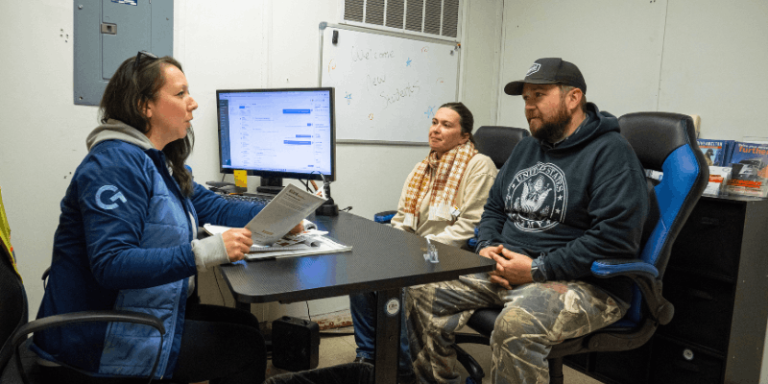
Students apply directly with the carrier, as if they were applying for a job. Carriers usually review driving records and work history, run background checks, and require a Department of Transportation (DOT) physical and drug screening. Each carrier sets its own standards, and acceptance is never guaranteed.
Approved students sign a training agreement before classes begin. This contract is the most important part of the process. Before signing, students should get clear answers to these questions:
- How long does the work commitment last?
- What counts as a training cost under the agreement?
- How does the balance get paid off?
- What does the driver owe if they leave early, and how soon is it due?
Students should read the whole contract and make sure they understand every part before signing.
What Are the Limits of Paid Training?
The biggest limit is the work commitment. A driver who leaves before the agreement ends may owe the remaining training balance, sometimes all at once. Life changes such as a family move, a health issue, or a job that is not a good fit can make a year-long commitment hard to keep for anyone who goes into it unprepared.
Paid training also ties a new driver to one employer from the start. That means less freedom to compare pay, home time, routes, and benefits across companies before choosing a first job.
Often, students who fund their training on their own terms have more choice after graduation. At a CDL school like CDA, the job placement team connects graduates with several carriers, so drivers can weigh their options before committing to one.
What Other Tuition Assistance Is Available?
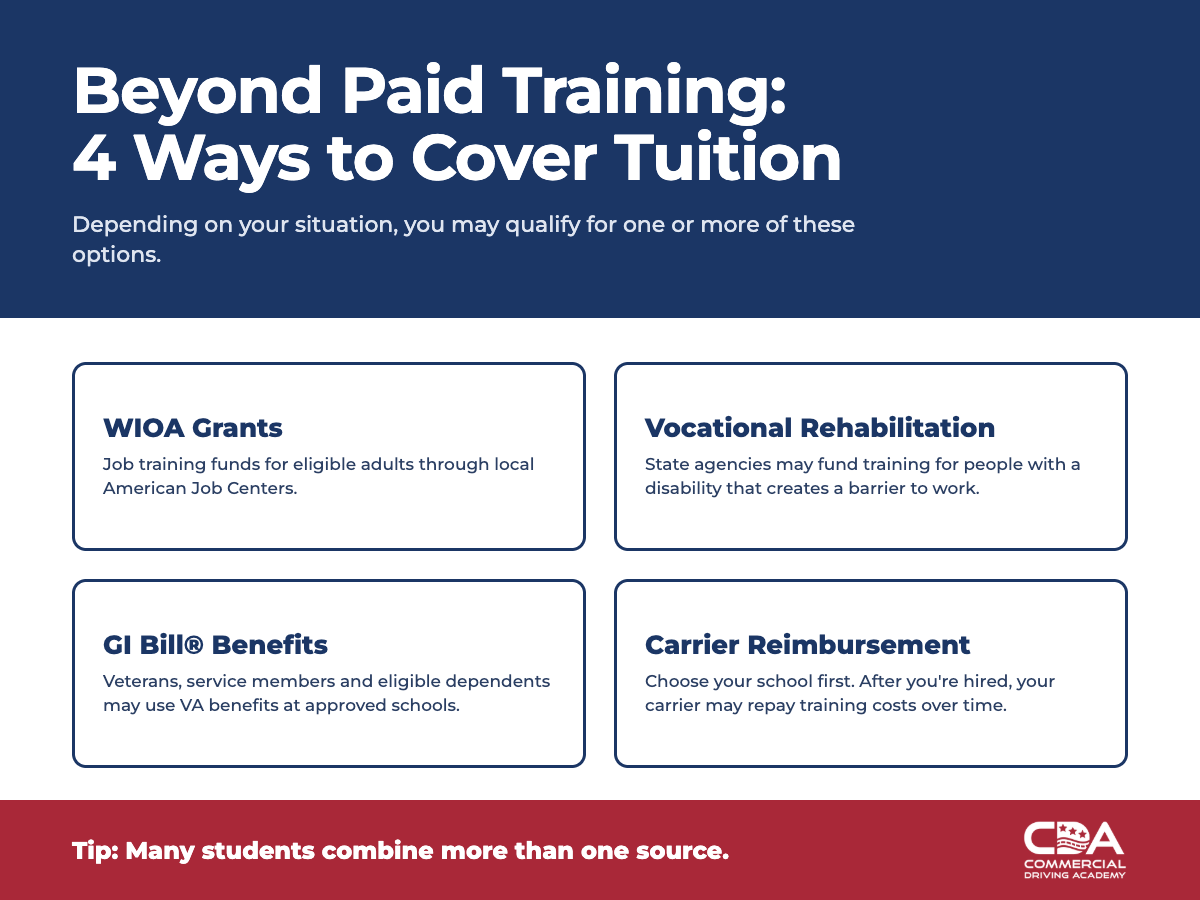
Paid training is only one way students can cover CDL school costs. Depending on their situation, students may qualify for one or more of these options:
- WIOA grants: The Workforce Innovation and Opportunity Act (WIOA) funds job training for eligible adults through local American Job Centers. Eligibility and available funds vary by area.
- Vocational Rehabilitation: State Vocational Rehabilitation agencies may fund CDL training for eligible people with a disability that creates a barrier to work.
- GI Bill® benefits: Veterans, active-duty service members, and eligible dependents may be able to use VA education benefits at approved schools.
- Carrier tuition reimbursement: Unlike paid training, the student chooses their own school first. After completing training and getting hired, the carrier they’re employed with may repay training costs over time.
Many students combine more than one source. The How to Pay page and the guide to CDL training grants and scholarships explain each option in more detail.
Choosing the Right Path to a CDL
Paid CDL training can help some students start a trucking career without paying tuition upfront. However, it is not free. It comes with a work commitment and a possible repayment bill for drivers who leave early.
Students who understand these terms can make a better choice about how to pay for school. Those who want more freedom in picking their first employer may want to explore other options first. CDA’s admissions team can walk students through tuition options at any of its campus locations. Students can contact CDA to learn more.
Frequently Asked Questions
How long does paid CDL training take?
It depends on the carrier. The CDL portion often takes a few weeks, followed by several more weeks on the road with a trainer.
Does paid training cover housing?
Sometimes. Some carriers provide lodging during training, but that cost may be added to the training balance, so students should check the agreement.
Where can I find paid CDL training?
Paid training programs are listed on carrier hiring websites and may also be available through partner CDL schools. CDA’s job placement team can help students learn which carriers may sponsor training at CDA.
Can someone with a DUI or tickets get paid CDL training?
It depends on the carrier. Each company sets its own hiring standards, and a recent DUI or serious violation may disqualify an applicant.
Can students under 21 get paid CDL training?
Some carriers accept applicants under 21, but many require students to be at least 21. In most cases, drivers under 21 can only drive within their home state.
Can paid training cover a Class B CDL?
Sometimes, but it is less common. Most carrier sponsorships focus on Class A CDL training, so students seeking a Class B CDL may need another way to pay.
What trucking companies pay for CDL training?
Many large carriers offer paid training or tuition reimbursement, but programs and terms change often. CDA’s admissions team can share which carriers currently work with CDA students.